Showing posts with label children. Show all posts

Monday, March 2, 2009

PreSchool Parenting: Strict Parenting is Consistent Parenting


Amy Wang of the Oregonian posed this question: "Are you a strict parent?"  She is the assistant features editor at the Oregonian and mother herself of two young boys.  It is a difficult question with unpredictable results.

It is in our natures to project into the future.  The only problem is we are not so good at predicting into the distant future.  Near future maybe, but predicting what will happen years from now is not within our scope of skills.  No, Moms and Dads may have been born with eyes in the back of their heads (something that we claim is for watching our child when we aren't facing them but is more often used to question our judgement in hindsight) but their ability to determine which action will make their child a better citizen is simply not possible.

Instead, we should shoot for short-term results that builds gradually.  This is how discipline works.  We call it strict parenting for two reasons.  It lays the boundaries of tolerable behavior and allows you to enforce those rules because of the relationship: parent to child.  But what is strict and how does it affect the relationship?

Numerous studies point to the fact that strictness is actually a good way to build a stronger relationship with your child.  But first, consider your relationship with your parents.  Was it lenient and free flowing or were you forced to live under unreasonable guidelines such as curfews and regular bedtimes?  Did your mother seem more like your friend or someone who was authoritative yet approachable (unapproachable would be not so good to align with authoritative)?  
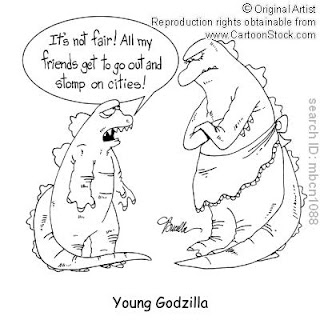
Whatever you relationship with your parents was, you will more than likely cherry pick some of the best qualities from their experience raising you, filter them and test them out your offspring. .  One of the best skills we possess is the ability to selectively mimic what we see as a good idea, when we acknowledge to ourselves, "this might work" and it doesn't much matter where we get it.  Your parents might not be a good template but if they are, draw on some of their best traits and adopt them.  Just remember, they didn't have much of a handbook to go on either

Strictness is more like consistency when it is done correctly.  You instruct a child on what you think is best and stand your ground.  You do not allow temper tantrums to sway you.  You do not allow comparisons to dissuade your decision (this will come later and make you feel like you are an inadequate parent) and do not let them see you flinch.  

This is also far from what would be considered by social scientists as authoritative rule where there is no leniency, no delicate balance that allows the child to make an argument that might make sense.  But keep in mind, this comes later after the child has found that their happiness and success is all that concerns you.  That their safety and health is really the reason you make them do the things they might not be so anxious to do. Preschoolers are just beginning to test those boundaries and rules and do not necessarily understand what you are trying to achieve.

Once the basis for such things as bedtimes and curfews is established though, structuring homework, dinnertimes and activities are taken for granted.  

I simply don't like the word strict.  I prefer consistent.  Consistent parents have taken the time to decide what is best and are willing to carry through, consistently.  They have tapped their inner "I know what's best" gene and are listening to it.  And at the same time, they are listening to their child and adapting as time moves on.  Consistency is more a state of general well-being, a familiarity with what to expect.  


Tuesday, September 23, 2008

Asthma, Kids and the Daycare Setting

We all know what asthma is. The wheezing, the lack of breath, the seemingly sickliness that having an inhaler at a young age all contribute to the image that your child's problem is of your making. And perhaps it is. But in all likelihood, it isn't.

The odds are stacked against your child when it comes to asthma. Researcher Nicolaos C. Nicolaou, MD of England's University of Manchester has identified several variables contributing to the disease. Being male, testing positive for allergic sensitivity, having a mother with asthma, and having a mother who smoked during pregnancy all have been known to add to the child's problems with breathing. But what Dr, Nicolaou was not expecting was the effect of daycare on asthma.

With over 6.2 million children in the US suffering from the illness (according to the American Lung Association), the concerns about how this problem develops the more a country industrializes has had medical researchers in quandary. Why if, as we progress and become more prosperous to the risk of breathing problems actually increase? Turns out, it is your house and your attempts at creating the most sterile environment possible for your child.

Not that there is something inherently wrong with keeping a clean house - and you certainly don't want to change your ways simply because your child cannot breath - but your fastidious behavior has been found to be a contributor. Why? You have eliminated many of the germs and bacteria that children readily absorb and use as a defense against the problem.

Called the Hygiene Hypothesis, Dr Nicolaou discovered that putting your child in a daycare situation actually increases the chances of your child gaining control over the problem. The contact with other children often builds the immune system back to normal levels and may actually stem the root cause of the asthma. While exposure to other children works in this process, older siblings living with the asthmatic child do not have the same effect.

Nicolaou was quoted in a recent article o WebMD saying that: ""This is probably because the size of the exposure matters," Nicolaou says. "Being exposed to a lot of children very early appears to be more protective than being exposed to just a few." He added that the daycare solution is best for children who are genetically disposed to asthma.

Next: Is the medication we give them also a cause?

Thursday, June 12, 2008

Pre-school Parenting and Those Adorable Chubby Cheeks

In the second of five posts on this subject, we look at those chubby-cheeked children, who, may or may not be overweight – which as many of you already know, is the last step before obesity.

Over the three years that the Centers for Disease Control and Prevention tracked, children ages 2-5 showed an increase in obesity, rising on average about 12%. Compared to 1980, those numbers are alarming.

Parents are increasingly dismissive when their pediatrician mentions the possibility that their child might be in the last several percentiles. (The medical profession use a body mass index to measure your child’s overall ranking as compared to other children of similar height and age, suggesting that those who are listed as above the 95th percentile are overweight.)

According to the CDC BMI or body mass index is defined as “a number calculated from a child’s weight and height. BMI is a reliable indicator of body fatness for most children and teens. BMI does not measure body fat directly, but research has shown that BMI correlates to direct measures of body fat, such as underwater weighing and dual energy x-ray absorptiometry (DXA). BMI can be considered an alternative for direct measures of body fat. Additionally, BMI is an inexpensive and easy-to-perform method of screening for weight categories that may lead to health problems.”

The site clarifies the measurement “For children and teens, BMI is age- and sex-specific and is often referred to as BMI-for-age.”
Here are some simple tips to guide you and your daycare provider in helping a child overcome this potential problem.

Stop! Offering your child alternative foods when they refuse to eat what you have given them sends the wrong signals.
    Go! Let them eat or not.

Stop! Don’t give up. Eating shouldn’t be a battle.
    Go!Many experts believe it takes as many as seven times for a child to accept a new kind of food.

Stop! This is as much your problem as the child’s.
    Go! Chances are, you received comfort foods as child and withdrawing them “because the child is overweight – and making the reason known, also signals the wrong thing to the toddler.

Stop! Limit the screen time.
    Go! Kids, by nature are conformists. Take them for a walk around the block after dinner or go out a play with them. It will do you some good as well.

Stop! Make it permanent and make it a family effort.
    Go! Everyone at the table will benefit form a better diet. Let them listen to their tummies and have fruits and vegetables available for them when they are hungry.


Even children who appear healthy and active can be developing problems with a diet too high in fat. Although children need more fat than their adult counterparts, it should be gained form healthy foods, not from the drive-up window at McDonalds.


Weight Status Category
Percentile Range

Underweight

Less than the 5th percentile

Healthy weight

5th percentile to less than the 85th
percentile

At risk of overweight

85th to less than the 95th percentile

Overweight

Equal to or greater than the 95th percentile

Tuesday, June 10, 2008

Food for Learning: How Parents teach their Children to Eat

Over the next five posts, we are going to focus on the subject of food.

Once the child reaches daycare/pre-school, her or his habits have begun to take shape. They have already started to make food choices, engaged in doing what they see other doing (modeling), been exposed to familiar foods, created opinions, witnessed some swings in parenting style, and quite possibly begun to make decisions about what foods they like and don’t like.

I am often struck by the long list of items that a child will or will not eat at the tender age of eighteen to twenty-four months. Once they get here (or just about any good pre-school or daycare situation) they will be often be sitting in front of a plate of nutritious food. Numerous daycares take advantage of government programs that offer some reimbursement for this very important function (although in my experience it is more of a subsidy than a straight across, dollar for purchased grocery exchange leaving some of the pass-down cost to fall over into the tuition).

In these sort of programs, regular menus are recorded not only for the parents to review (and a good provider will offer these menus at the end of each day) but for the regular, often as much as four times annually, inspections. How your child eats at this point has little to do with what she or he likes. Many providers will attempt to make the food as attractive to the child as possible but if the child is unfamiliar with these types of food, they may balk at eating them.

This is where you, the parent come in. How your child progresses through the food pyramid, yes that good ole breads on the bottom, lots of servings a day to the sparsely inhabited sweets, fats and oils that tops the heart healthy, good-for the bones Food Guide.

Here are four easy steps to getting your child’s diet for the world that cares about what they eat.

    1. Give them numerous nutritional options. This can be especially difficult as food costs increase but offering them a small portion of several items, you can narrow down what the child prefers. The second part of this “give the child a choice” is to not lure them into liking the wrong thing. Adding a caramel dipping sauce to an apple snack doesn’t promote the apple. Smothering otherwise nutritious potatoes with gravy doesn’t give the child the opportunity to enjoy the vegetable just as a jelly smeared piece of whole grain toast doesn’t let the goodness of the bread shine.

    2. If you don’t eat it, they won’t eat it. Drop the words that paint a picture of the foods flavor. You know the ones: Yummy and Yucky and any other kid friendly description of taste, good or bad paint the wrong picture.

    3. Convenience out, home prep in. Far too many parents feed their kids with the wrong end of the pyramid first. Fast food doesn’t have to be bad food. A small sandwich will hold a hungry child at bay until you can out together a small meal. Refer to rule number 2 and you will probably see some room for improvement in your own eating habits.

    4. Consistency always should be what guides you. A married couple should discuss this each day and focus on how they can be on the same page. Talk with your provider about what they are serving and how you can improve your child’s diet at home. Peer pressure often helps at pre-school or daycare and knowing that if they do not eat what they are given, they will not have alternatives. Allowing the child to leave the table without eating allows you to retain your authority. Offer them the food later, and if they fail to eat lunch a second time, they should be able to wait until dinner. Kids have limited emotions promoted by physical surroundings and hunger (the refusal to eat, not the refusal to feed) can be very real. If you have given the child choices and they have made the wrong ones, as long as their safety has not been compromised, be consistent.

Wednesday, June 4, 2008

Your Child's Play

This topic doesn't surface often but when it does, parents and pre-school educators often find themselves in two different camps. Presenting a child with a new toy, one that provides them with what you would consider a thoughtful experience, often finds you wanting to teach the child how to play with the toy. Should you?

Probably not. Think about Christmas morning when your pre-schooler seems more interested in the box the gift came in rather than the toy "Santa" brought that will teach them calculus in a fun way! There is a reason for this.

According to FamilyEducation.com, "Play can help children develop the knowledge they need to connect in meaningful ways to the challenges they encounter in school. Play also contributes to how children view themselves as learners."

While it is important to teach a child how to play a piano or chess or instruct them on the rules of soccer, teaching a child "how to play" with that new cognitive toy designed to help them do-something-or-other later in life is robbing them of the learning experience.

Playtime has changed over the years. Television was allowed to intervene in this otherwise inventive time in a child's life. And your patience, the cost of the toy and where you believe your child should be on the learning curve has also changed. Children by nature are imitators but that doesn't mean they will play by example.

Don't be frustrated with how your child plays or with what. Instead, take a moment a remember how you played for hourson end with little or no "products designed to enlighten and teach".

To help, it will pay to keep these three simple rules in mind.

First: Buy the age appropriate toy for your child. Little Johnny is only three. Don't give him toys designed for a child aged five to eight in the hope that your little progeny will play-up.

Second: Give them time to play. Allow them the opportunity to have that epiphany. Give them the opportunity to have one of those, "oh, that's what this toy does" even if they can't actually vocalize it. This doesn't mean you shouldn't give them a gentle push in the right direction but too often, we want them to grasp the meaning right away.

Third: Allow them to invent. It generally worked for you as a child, playing with dolls or climbing tree to look for pirates on the horizon. Puzzles may need a little bit of intervention but not too much. Showing them how to get started is okay. Doing it for them is not.

The most difficult thing you will have to do is redirect your child away from some of the more violent media influences they may have encountered.